|
| |
Welcome to the first ECA–ESMR Newsletter!
|
| |
We are excited to launch this newsletter as a way to keep our community connected and informed. Here you will find updates from the ECA board, announcements of upcoming events, deadlines for the annual ECM meeting, and information on open positions in muscle research as well as fellowships and grant opportunities.
|
| |
Each issue will also feature a Spotlight Paper, highlighting a particularly exciting recent study in muscle research. In addition, we will include Member Papers of the Month, where ECA–ESMR members can share their latest publications with the community, each accompanied by a short summary.
|
| |
If you would like to highlight your work or share opportunities with the community, we encourage you to get in touch.
|
| |
We hope this newsletter helps strengthen connections across our field and keeps you up to date with the latest developments and opportunities in muscle research.
|
| |
Happy reading!
|
| |
In this update...
|
| |
| • | ECA board: new roles, new faces, and latest updates
|
|
| • | Upcoming Event: AI in Research & Publishing
|
|
| • | Meet the Board Members series: Dr. Maicon Landim-Vieira (ECA chair)
|
|
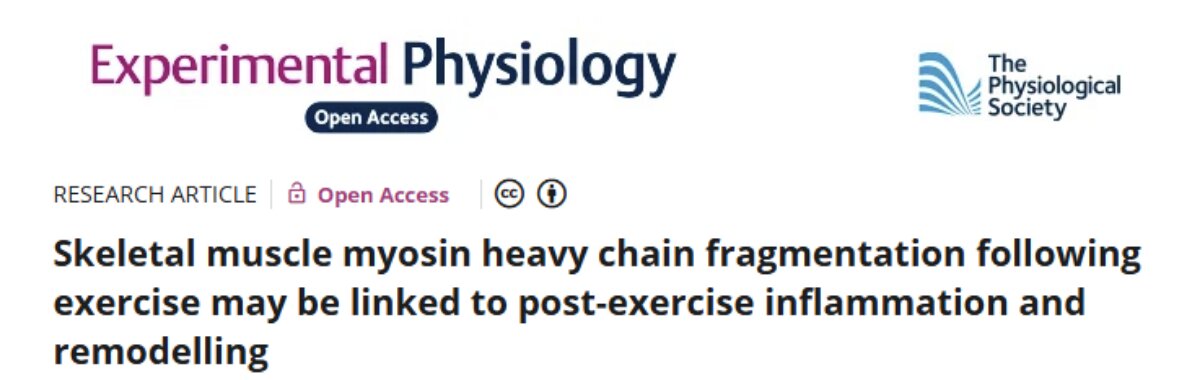
| • | Spotlight paper: MYHC fragmentation following exercise (Tiede et al.)
|
|
| • | Open positions in muscle research
|
|
| • | Did you know... about the central govenor theory?
|
|
| • | Have FUN reading THIS paper
|
|
| |
~ 5 min read
|
| |
|
| |
ECA board changes
|
| |
Congratulations to Franziska Koser on becoming our new Co-Chair and to Annika Klotz on taking on the Secretary role! A warm welcome as well to our new core members: Kerstin Filippi, Ayesha Sarfraz, and Vanessa Todorow.
|
| |
|
| |
Upcoming Events
|
| |
|
| |
AI is rapidly becoming part of every stage of research—from early brainstorming to troubleshooting experiments, drafting scientific text, analyzing complex datasets, and planning experimental designs. These tools aren’t replacing scientists; but how do we keep it that way? As AI becomes woven into the scientific workflow, the challenge shifts from simply adopting new tools to actively guiding them. Our speaker, Dom Gray, obtained his bachelor's degree in Sport and Exercise Science from the University of Roehampton. He continued his education at King's College London, where he obtained his master's degree in Human & Applied Physiology. After graduate school, Dom worked as a Research Integrity Analyst at Frontiers for 2 years. He then transitioned to his current position as Senior Integrity Analyst at Springer Nature Group. In this session, Dom will share insights from the publishing side and discuss the responsible use of AI in scientific writing and manuscript preparation.
|
|
|
|
AI is rapidly becoming part of every stage of research—from early brainstorming to troubleshooting experiments, drafting scientific text, analyzing complex datasets, and planning experimental designs. These tools aren’t replacing scientists; but how do we keep it that way? As AI becomes woven into the scientific workflow, the challenge shifts from simply adopting new tools to actively guiding them. Our speaker, Dom Gray, obtained his bachelor's degree in Sport and Exercise Science from the University of Roehampton. He continued his education at King's College London, where he obtained his master's degree in Human & Applied Physiology. After graduate school, Dom worked as a Research Integrity Analyst at Frontiers for 2 years. He then transitioned to his current position as Senior Integrity Analyst at Springer Nature Group. In this session, Dom will share insights from the publishing side and discuss the responsible use of AI in scientific writing and manuscript preparation.
|
|
|
|
|
| |
Meet the board members
|
| |
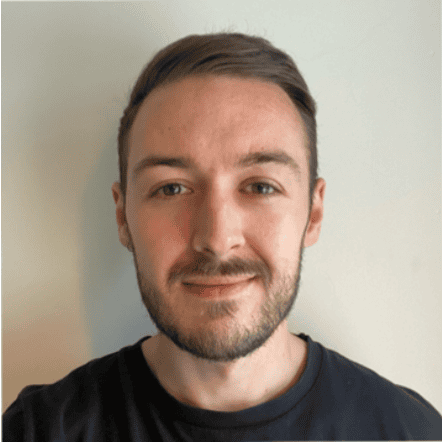
In our first Meet the Board Member feature, get to know Maicon, Chair of the Early Career Association (ECA).
|
| |
| | Meet Maicon
| | | Maicon Landim-Vieira is a Brazilian scientist who started out in Biomedical Sciences at the Federal University of the State of Rio de Janeiro (Brazil) and then headed to the U.S. for his PhD and postdoc at the Florida State University College of Medicine. Currently, he’s a Research Assistant Professor at Illinois Institute of Technology in Chicago, where he studies cardiomyopathies and how changes in sarcomere structure and function drive disease.
| | | Funfacts: Outside the lab, his favorite color is basically a moving target (currently green), he’s Blackpink’s #1 fan (no debate), and a full-on K-pop enthusiast who will absolutely cry watching Korean dramas—right now it’s Queen of Tears. He’s also learning Korean and is clearly on a fast track to singing Blackpink at karaoke nights very soon.
|
|
|
|
| | | Meet Maicon
| | | Maicon Landim-Vieira is a Brazilian scientist who started out in Biomedical Sciences at the Federal University of the State of Rio de Janeiro (Brazil) and then headed to the U.S. for his PhD and postdoc at the Florida State University College of Medicine. Currently, he’s a Research Assistant Professor at Illinois Institute of Technology in Chicago, where he studies cardiomyopathies and how changes in sarcomere structure and function drive disease.
| | | Funfacts: Outside the lab, his favorite color is basically a moving target (currently green), he’s Blackpink’s #1 fan (no debate), and a full-on K-pop enthusiast who will absolutely cry watching Korean dramas—right now it’s Queen of Tears. He’s also learning Korean and is clearly on a fast track to singing Blackpink at karaoke nights very soon.
|
|
|
|
|
| |
|
| |
Spotlight paper
|
| |
|
| |
"Obtaining simple biomarkers of myofibrillar damage in vivo is lacking, often relying on indirect biomarkers of muscle damage such as serum creatine kinase. Here, Tiede et al. show that a single bout of acute exercise causes detectable myosin heavy chain (MyHC) fragmentation in human skeletal muscle, where individuals who had the highest post-exercise MyHC fragmentation concomitantly displayed a post-exercise muscle gene expression profile mapped to inflammation and remodeling. These findings suggest MyHC fragmentation may serve as a novel biomarker of exercise- or contraction-induced myofibrillar disruption that should fuel further mechanistic research." - Dakota Tiede & Marcas Bauman.
|
| |
Read the full paper here
|
| |
Recently published?
Submit your work for consideration as our Spotlight Paper or to be featured in our Member Papers of the Month: esmr.eca.info@gmail.com
|
|
|
|
Recently published?
Submit your work for consideration as our Spotlight Paper or to be featured in our Member Papers of the Month: esmr.eca.info@gmail.com
|
|
|
|
|
| |
Open positions in muscle research
|
| |
| | | | | | | | | | | Post-Doc – Skeletal Muscle Molecular Physiology & Epigenetics
|
| Norwegian School of Sport Sciences
|
| | | | Postdoctoral Fellowship – Diabetes Research (USA)
|
| American Diabetes Association
|
| | | | Postdoctoral Fellow – Atrial Myopathy in Heart Disease
|
| Loyola University Chicago
|
| | | | Translational Scientist – Muscle Biology
|
| | | | |
|
| |
|
| |
Did you know...
|
| |
...the brain limits your muscles before they truly fail?
|
| |
During intense exercise, muscles often don’t fail because they run out of energy, but because the brain reduces motor drive to protect the body. This concept, sometimes called the central governor theory, suggests that fatigue is partly a protective regulation by the nervous system, not just a mechanical failure of muscle.
|
| |
|
| |
Mr. Salmon, which emotion is this?
|
| |
In an elegant demonstration of statistical caution, researchers placed a post-mortem Atlantic salmon into an fMRI scanner and showed it photographs of people. The salmon was asked to determine which emotion the individual in the image must have been experiencing.
|
| |
Several voxels responded enthusiastically.
|
| |
After correction for multiple comparisons, the dead salmon’s social cognition abilities were found to be somewhat less robust.
|
| |
Read the full paper here.
|
| |
|
| |
Follow us:
|
| |
|
| |
|
| |
|
| |
Thank you!
|
| |
|
| |
Don’t want to receive this newsletter? Unsubscribe by emailing:
|
| |
esmr.eca.info@gmail.com
|