|
Welcome to the 3rd ECA–ESMR Newsletter!
|
We’re glad to have you back. This newsletter keeps our community up to date with ECA–ESMR news, upcoming events, EMC deadlines, and opportunities in muscle research, including open positions, fellowships, and grants.
|
As always, we highlight a Spotlight Paper and feature Member Papers of the Month, where all submitted publications are shared with the community.
|
If you’d like to promote your work or opportunities, feel free to get in touch.
|
Happy reading!
|
In this update...
|
| • | ECM conference: Registration open until 15 August
|
|
| • | Meet the Board Members series: M.Sc. Annika Klotz (Secretary)
|
|
| • | Spotlight paper: Contractile Protein Function in Severe Obesity (Jani et al.)
|
|
| • | Member Paper of the Month
|
|
| • | DACH-NMD Kick-off Meeting: New Network Launches This November
|
|
| • | Did you know... your first-author papers don't all contribute equally to your h-index?
|
|
| • | Have FUN reading THIS paper: Sex-deprived flies turn to alcohol!
|
|
~ 5 min read
|
| |
|
EMC 2026: See You in Vienna!
|
Registration for the 53rd European Muscle Conference is open until 15 August! Join the international muscle research community in Vienna from 6–9 September 2026 for an exciting scientific programme spanning molecular muscle biology to physiology and disease.
|
The meeting also features the Young Investigators Symposium, organised by the ESMR Early Careers Association, providing an excellent platform for PhD students and early-career postdocs to present their work and network with colleagues. We look forward to welcoming you to Vienna!
|
If you haven’t done so already, register here.
|
|
Meet the board members
|
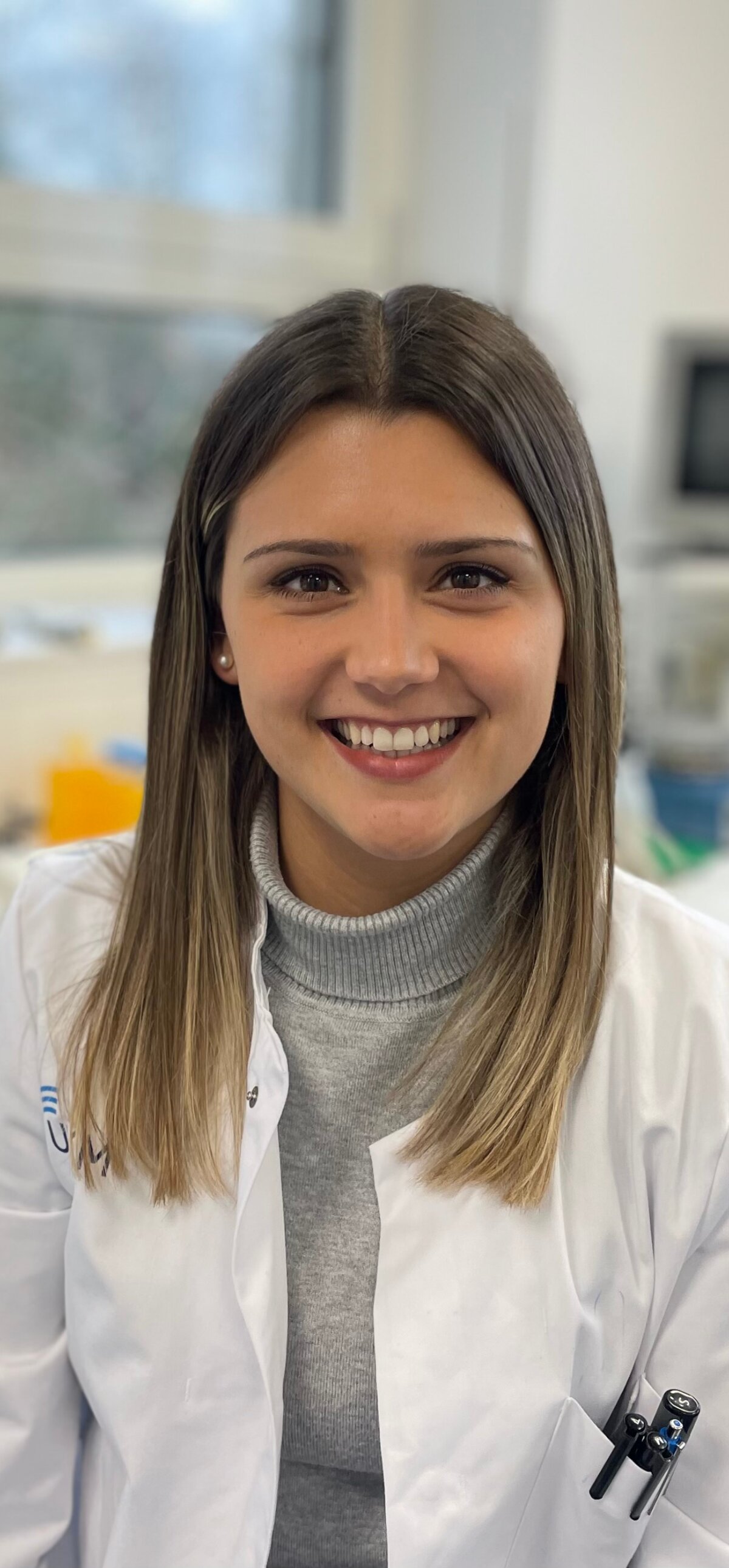
In our third Meet the Board Member feature, get to know Annika, Secretary of the Early Career Association (ECA).
|
| | Meet Annika
| Annika Klotz is a PhD candidate in Prof. Wolfgang Linke’s lab at the University of Münster, where she investigates how loss of titin elasticity affects cardiac function. She studied biomechanics at the University of Stuttgart, with study abroad stays at Linnaeus University in Sweden and The University of Western Australia. Beyond the lab bench, she enjoys programming to make sense of complex experimental data.
| Fun facts: In her youth, Annika probably spent more time on her hands than on her feet: as a competitive artistic cycling athlete, she was the youngest woman at the time to perform a handstand on a moving bicycle. These days, she has redirected that energy toward climbing walls and travelling the globe. In the lab, you can rely on her to keep the atmosphere alive by bringing her music box to long experiment sessions.
|
|
|
|
|
| |
Spotlight paper
|
|
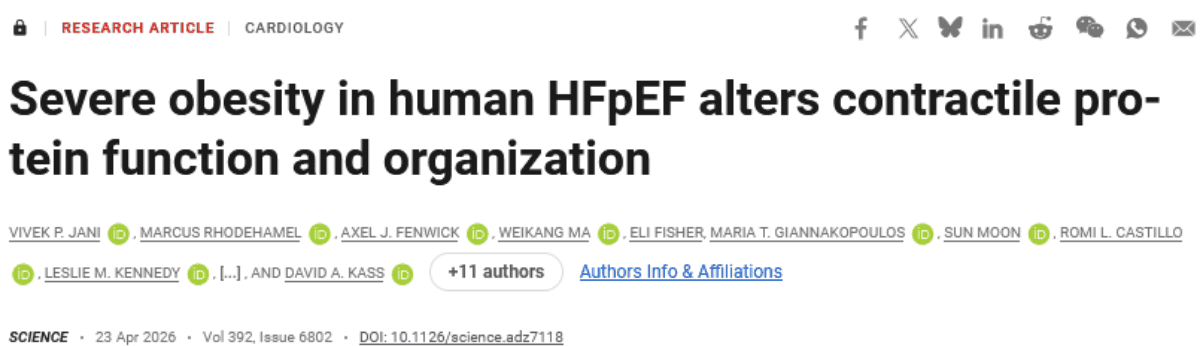
Why does severe obesity worsen heart failure with preserved ejection fraction (HFpEF)? Jani et al. show that the combination of HFpEF and severe obesity markedly impairs cardiomyocyte contractility, reducing calcium-activated force, length-dependent activation, and contractile reserve—defects not observed in equally obese individuals without heart failure. Importantly, these abnormalities correlated with BMI and exercise capacity, improved following weight loss, and were linked to altered sarcomere protein phosphorylation, highlighting the contractile apparatus as a promising therapeutic target.
|
Read the full paper here
|
| |
Member Papers of the Month
|
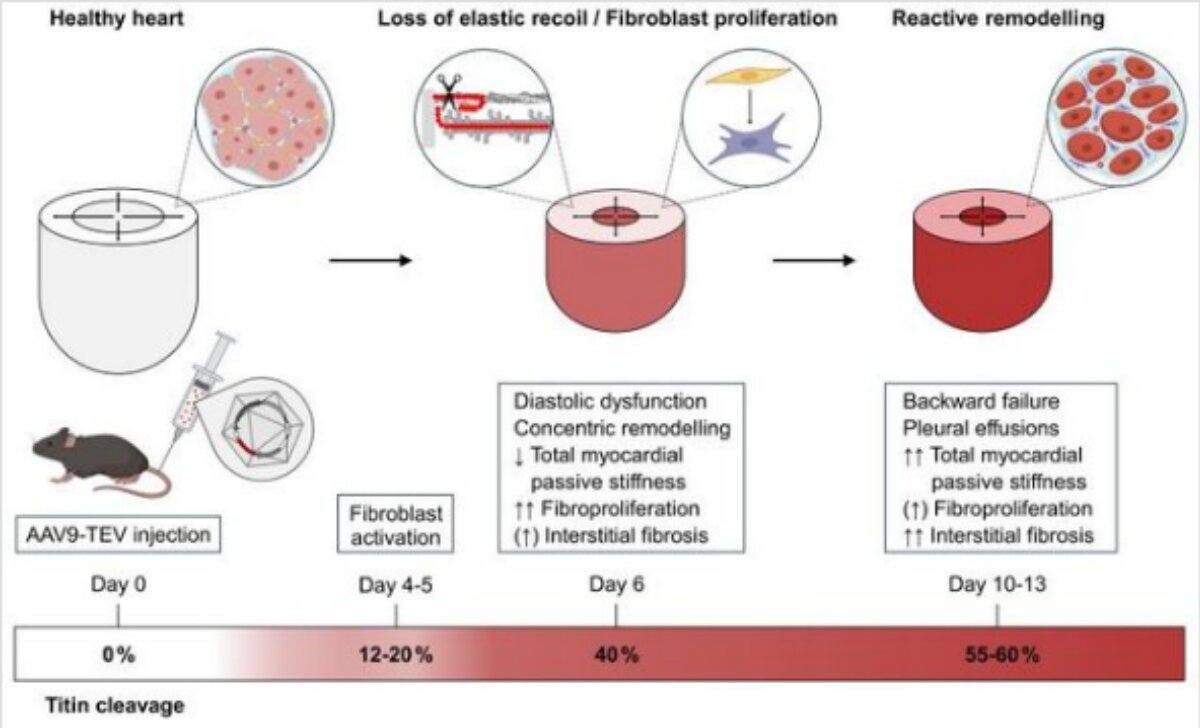
We congratulate our board members Franziska Koser and Annika Klotz and the whole group around the ESMR Chair, Prof. Wolfgang Linke, on their recent publication in Nature Cardiovascular Research, demonstrating that proteolytic cleavage of titin disrupts cardiac mechanical homeostasis, ultimately driving heart failure and fibrosis. Read more about it on LinkedIn and in the original publication: Selective titin cleavage disrupts cardiac mechanical homeostasis to drive heart failure and fibrosis
|
|
Recently published?
Submit your work for consideration as our Spotlight Paper or to be featured in our Member Papers of the Month: esmr.eca.info@gmail.com
|
|
|
|
|
Join the DACH-NMD Kick-off Meeting – Call for Abstracts
|
A new network for neuromuscular research across Austria, Germany, and Switzerland is launching! The inaugural DACH-NMD Kick-off Meeting will take place online on 27 November 2026 (9:00 a.m.–1:00 p.m. CET) and aims to connect researchers across basic, translational, and clinical neuromuscular science.
|
The meeting is particularly intended for early- to mid-career scientists and physicians, while established investigators interested in collaborative research are equally welcome. Participants will have the opportunity to shape the future of the network, establish new collaborations, discuss priorities for multicentre research, and foster mentoring opportunities across the DACH region.
|
Call for abstracts: Early-career researchers are warmly invited to present their work. Submit a title, affiliations and presenting author, indicate whether your work is primarily basic, translational, or clinical, and include an abstract of up to 200 words.
|
Abstract submission deadline: 1 September 2026.
|
| |
Open positions in muscle research
|
No open positions a the moment.
|
|
Did you know...
|
...your first-author papers don't all contribute equally to your h-index?
|
Proposed by Jorge E. Hirsch in 2005, the h-index combines productivity and citation impact. A researcher has an h-index of h if they have published h papers that have each been cited at least h times. For example, an h-index of 15 means that 15 publications have each received at least 15 citations. A publication cited only 14 times falls below this threshold and therefore does not contribute to an h-index of 15.
|
Read more about the h-index in the original publication by Hirsch: An index to quantify an individual's scientific research output | PNAS
|
| |
From Heartbreak to Happy Hour: Rejected Fruit Flies Drink More
|
In a remarkable Science paper, Shohat-Ophir et al. discovered that sexually deprived male Drosophila voluntarily consume significantly more ethanol than successfully mated males. The study revealed that this surprising behavior is regulated by the conserved neuropeptide F (NPF) reward pathway, linking social experience to addiction-like behavior and demonstrating that even fruit flies may seek alternative rewards after rejection.
|
Read the full paper here
|
| |
Follow us:
|
|
| |
|
| |
|
| |
Thank you!
|
| |
Don’t want to receive this newsletter? Unsubscribe by emailing:
|
esmr.eca.info@gmail.com
|